
Fittiam journal · Everyday movement in Malta
A morning at your desk, lunch in front of a screen, another afternoon of meetings — then a drive home and an evening on the sofa. If you work in Malta, it can be surprisingly easy to reach the end of the day without moving very much.
Perhaps your shoulders feel tight after video calls. Perhaps your back feels uncomfortable when you finally get up. Or perhaps you simply miss feeling active.
You do not have to overhaul your life overnight. A more comfortable workstation, regular opportunities to move and exercise that suits you are manageable places to start.
Explore practical ways to move more ↓What do the figures tell us about sitting in Malta?
Two local findings help put the issue into perspective:
Around one in four people in Malta spends more than eight and a half hours a day sitting.
SportMalta reported this in its October 2026 summary of the latest Sport and Physical Activity Survey.
Population-level finding, rather than a statistic specifically about office workers. Source: SportMalta, 2026
Reported musculoskeletal pain in a study of 459 teleworkers in Malta.
The 2023 research surveyed people working in IT and communications organisations. Back pain was the most commonly reported problem, followed by neck and shoulder pain.
This is not a figure for all Maltese workers, and does not show that sitting alone caused symptoms. Source: Fiorini, 2023 · University of Malta repository
These findings make everyday movement a relevant topic for anyone spending much of their working life at a desk in Malta.
Why does a sedentary working day matter?
The health effects extend beyond an uncomfortable back. Higher amounts of sedentary time are associated with a greater risk of cardiovascular disease and type 2 diabetes. Regular physical activity supports physical and mental health, including sleep and wellbeing. Source: WHO
Sitting time and exercise are also different things: you can attend a class after work and still spend many hours sitting during the day.
For your back, the picture is more individual. There is no single sitting position that guarantees comfort, and back pain should not automatically be blamed on “bad posture”. Staying in one position for a long time can aggravate symptoms for some people. Source: Cambridge University Hospitals
Make your workstation comfortable — and give yourself room to move
Whether you work in a Naxxar office or from a laptop at home, start with a few practical adjustments:
- Support your feet on the floor or a footrest.
- Choose a chair that feels comfortable and supports your back.
- Keep your keyboard and mouse within easy reach.
- Position your screen so that you can read it without repeatedly leaning forwards.
- For longer laptop sessions, consider a separate keyboard and mouse so you can raise the screen independently.
These are ways to make working more comfortable, rather than rules for holding your body perfectly still. Adjust your position when you need to.
Guidance: CUH seating and ergonomics and HSE home-working guidance.
Build movement into your working day
01. Use everyday tasks as movement reminders
You do not need to wait until your lunch break to leave your chair.
Try walking to refill your water after a meeting, standing up between tasks or taking a short walk while making a phone call, where practical. Short, frequent breaks from screen work can be easier to build into the day than occasional long ones. Source: HSE
Choose reminders that fit your workload. The aim is a repeatable habit, rather than another demanding item on your to-do list.
02. Plan movement around life in Malta
Think about what is realistic on your working days.
A short walk before work, a few minutes away from your desk at lunchtime or an indoor class after work could all have a place in your routine. On hot days, choose a cooler time or an indoor option. If your usual route involves busy roads or unsuitable pavements, choose a safer place to walk.
You do not have to turn every journey into exercise. Start with one opportunity that you can repeat.
03. Include strengthening as well as walking
Walking is a useful starting point, but a balanced routine also includes activities that challenge your muscles.
WHO guidance recommends 150–300 minutes of moderate aerobic activity per week, or an equivalent amount of vigorous activity, alongside muscle-strengthening activity on at least two days. If you are currently inactive, build towards this gradually: some activity is better than none. Source: WHO physical activity guidelines
Your starting point should reflect your fitness, health and confidence.
04. Give your working day an ending
When home is also your office, it can be tempting to check messages throughout the evening.
The Maltese teleworking study found associations between musculoskeletal pain, working outside normal hours, lower exercise frequency and higher burnout. It did not prove that one caused the other, but it highlights why work habits deserve attention alongside your chair and desk. Source: Fiorini, 2023
Try scheduling a clear finish time and a small activity afterwards — even a short walk can create a useful transition between work and home life.

Local guidance · Your pace
Find a comfortable starting point with Fittiam in Naxxar
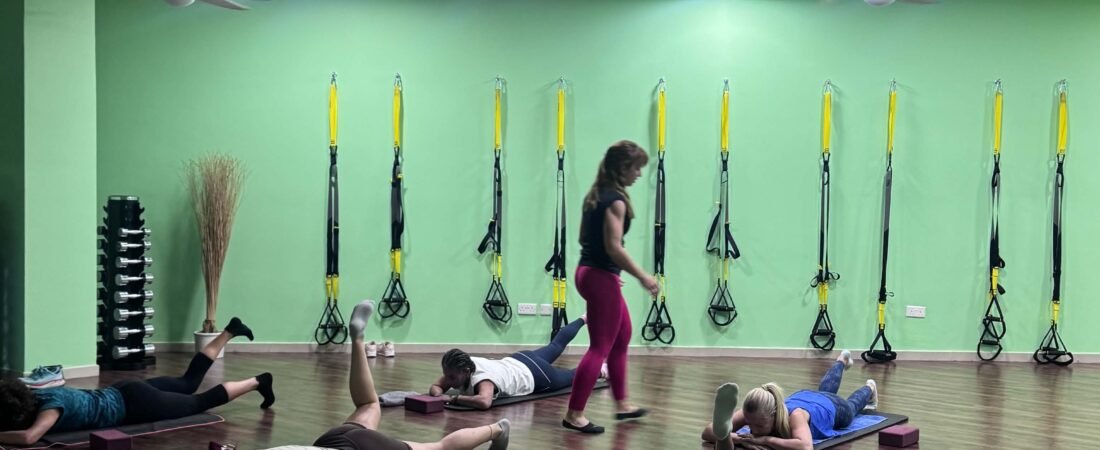
If you would like guidance, I’m Judit, and I offer personal and group training in Naxxar, Malta.

These sessions are exercise, rather than medical treatment, and cannot promise to prevent or cure back pain.
Common questions about desk work and back discomfort
Do I need to sit perfectly upright all day?
No. There is no single perfect posture that everyone must maintain. Find comfortable positions and change them regularly, rather than forcing yourself to remain rigid. Source: CUH
Will a standing desk solve the problem?
A standing desk can offer another position, but standing still for hours is not a guaranteed solution. Use it as an opportunity to vary your position, alongside walking and other movement.
Is exercising after work enough?
An evening workout is worthwhile, but it does not reduce the hours you have already spent sitting. Combine regular exercise with opportunities to move during the working day. WHO guidance recommends both physical activity and limiting sedentary time. Source: WHO guidelines
Can I join a class if I am a complete beginner?
Yes — contact me first so we can discuss your starting point and which session may suit you. You do not need to get fit before asking for support.
What if my back already hurts?
If pain persists, worsens or interferes with everyday activities, speak to a qualified healthcare professional. Stop exercises that make your pain worse. Back pain accompanied by new bladder or bowel changes, numbness around the genitals or anus, or symptoms in both legs requires urgent medical assessment. Source: NHS
A manageable way to move more
Would you like help finding your starting point? Tell me about your working day, your experience and what you would like to work towards.
Get in touch with Judit →