

If your lower back aches after a long day at a desk, behind the wheel or on your feet, gentle exercise may help you stay active and feel more confident about moving. Once you know exercise is suitable for you, back-mobility training with Pilates elements offers a way to start at your own pace, either in a group or one-to-one. If the pain is getting worse or making everyday tasks difficult, speak to a GP or physiotherapist before choosing a class.
When your back starts making decisions for you
Perhaps you’ve started asking someone else to carry the shopping upstairs. Or you get home from work wanting a walk, sit down to change your shoes and decide it would be easier to stay in. Those small changes are worth noticing. They also give you a useful starting point when someone asks, “What would you like to feel more comfortable doing?”
Why strength matters after 40, especially if you sit for work
From midlife onwards, we tend to lose muscle mass and strength gradually. The pace varies from person to person. If you spend much of your working day sitting, your legs may get few chances to work against much resistance. Over time, familiar tasks can start to take more effort: getting up from a low sofa, carrying the shopping up to your flat or getting back to your feet after playing with a child on the floor.
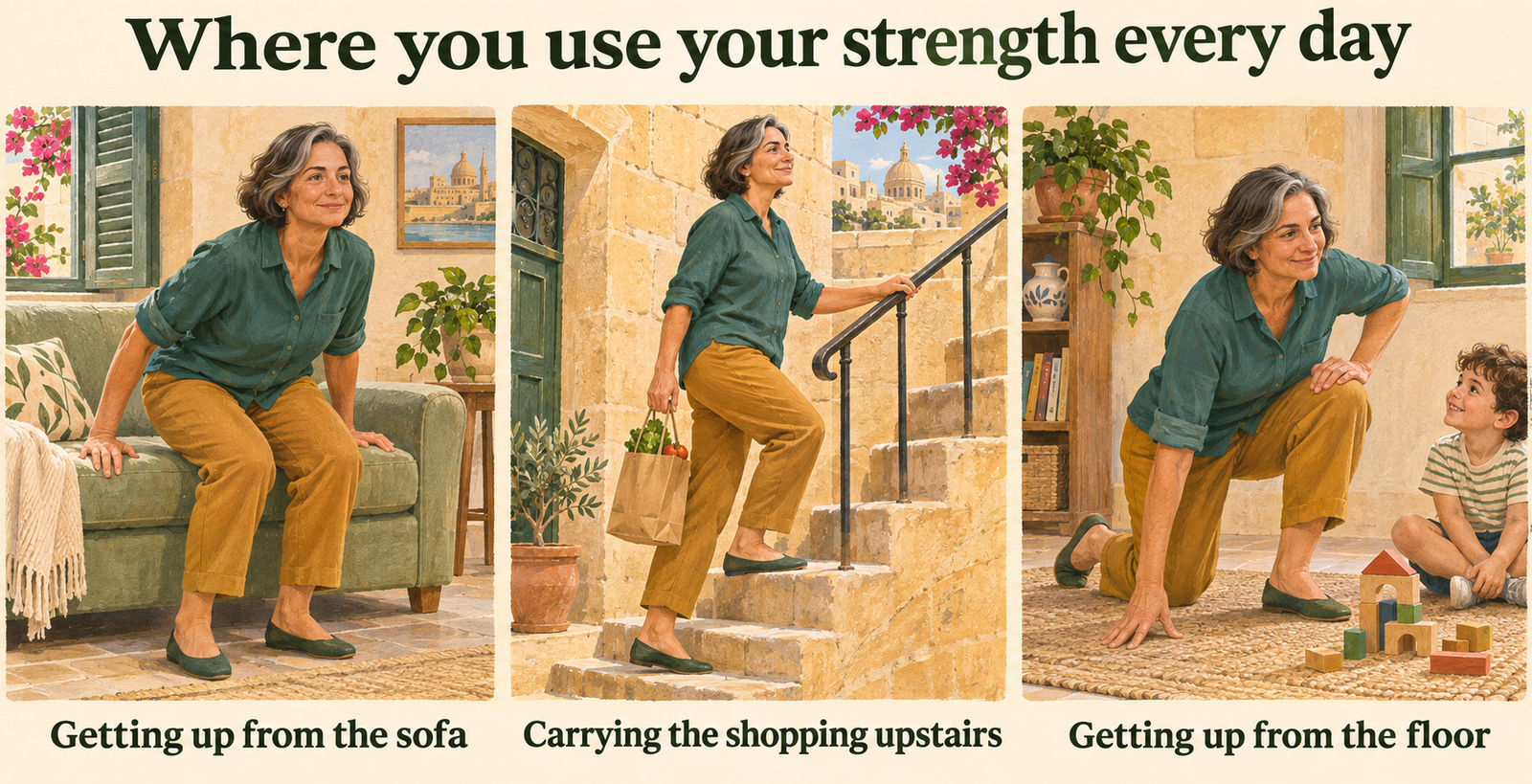
Regular strengthening exercise can slow that loss and help you regain some muscle and strength. Think about getting up from a chair. Your thighs and hips do much of the work. If that movement is comfortable for you, practising it from a seat that suits your height is one way to start. As it becomes easier, a trainer can help you choose a little more resistance. If your goal is to manage the stairs more comfortably, that everyday task gives you something meaningful to judge your progress by.
If you also have back pain, it helps to think about strength and comfort separately. Back pain on its own doesn’t tell you that your muscles are weak. Back-mobility training with Pilates elements can give you time to explore comfortable movement, while gradually adding resistance can help you build strength.
If sitting leaves you stiff, start with the next change of position
Say your back feels uncomfortable towards the end of a morning of video calls. At the next break, try a small change you can repeat tomorrow: stand while you put the kettle on, walk to speak to a colleague or take a short stroll before lunch. Notice which of those feels comfortable and fits naturally into the day.
The same idea can look quite different if you work on your feet. After a shift spent standing at a counter, sitting down for a few minutes may be the welcome change. If driving takes up much of your day, a short walk when you arrive may suit you better. Pay attention to when you feel uncomfortable, what you were doing and what feels easier afterwards. Those observations are also useful if you speak to a physiotherapist.
What can back-mobility training with Pilates elements help you practise?

In a back-mobility session, you have time to explore movements that are easy to rush through in daily life. You might practise letting your breath flow while you move a leg, controlling a small movement of the pelvis, or turning your upper body through a range that feels comfortable. The muscles around your trunk and hips take part, but the aim can be as ordinary as feeling more at ease when you turn, reach or change position.
One useful skill is learning how to adjust a movement. Imagine following a demonstration and finding that the last part feels uncomfortable. You can pause, tell the instructor where you felt it and try a smaller version if appropriate. Knowing how to speak up and make that adjustment can be valuable long after the class ends.
Research into Pilates for non-specific lower back pain suggests it may help some people with pain and everyday function. The term non-specific means that a particular cause has not been identified. The evidence does not establish Pilates as the best exercise for everyone, and it cannot predict how an individual will respond to a particular fitness class. If you enjoy moving this way and the level suits you, that is a good reason to consider it. Cochrane review of Pilates for low back pain
When should you get advice before exercising?
If your back pain is stopping you doing ordinary things, has continued for several weeks without improving, or keeps returning and you’re unsure what you can manage, speak to a GP or physiotherapist. A clinician can assess your symptoms and help you decide what type of activity is appropriate. A fitness instructor can then take that guidance into account.
Seek urgent medical advice if the pain starts suddenly and is severe, gets worse quickly, or comes with a fever or feeling generally unwell. Call 112 in Malta if back pain comes with new difficulty passing urine, loss of bladder or bowel control, numbness around the genitals or bottom, or new weakness or numbness in both legs. Back pain following a serious accident also needs emergency assessment.
A group class or one-to-one training in Naxxar?
A group class may suit you if you’d enjoy a regular time to move with other people. Perhaps you finish a day at your desk wanting to stretch out, concentrate on something other than a screen and be guided through a sequence. Before your first class, tell the instructor if a particular position is difficult. A practical question is, “I’m comfortable standing, but getting up from a mat takes me a little longer. How much of the class is floor-based?” You can explore group back-mobility training with Pilates elements in Naxxar.
One-to-one training may suit you if you’d like more time to find your starting point. You might feel comfortable walking but hesitant about bending, or have guidance from a physiotherapist that you’d like your trainer to work with. In an individual session, there’s time to discuss that, practise one movement at a time and adjust the pace around you. Read about personal training with Judit in Naxxar.
A useful way to choose is to picture your first ten minutes in the room. Would it feel reassuring to follow a group, or would you prefer to show someone a movement you find difficult and ask questions in private?
Frequently Asked Questions
Do I need to be flexible before I try a class?
No. You can begin with the range of movement available to you. If you’re worried about a particular part of the class, such as kneeling or lying on your back, mention that before booking so you can find out what alternatives are available.
What if an exercise makes my back hurt more?
Stop that movement and let the instructor know what changed. You can leave it out. If the pain continues to worsen, or you’re unsure what is safe for you, get advice from a healthcare professional before trying it again.
If walking already feels good, do I need Pilates as well?
You can keep walking if it suits you. A class offers something different: time to practise a variety of movements with guidance. You might enjoy both, or prefer to keep your walk as the part of the day when you feel most comfortable moving.
What should I tell Judit before my first session?
A short description of everyday life is enough to start the conversation. For example: “I sit for most of my shift. Walking feels fine, but I’m unsure about getting down to the floor. Could we talk through what the first session involves?” If a clinician has given you advice about exercise, mention that too.