
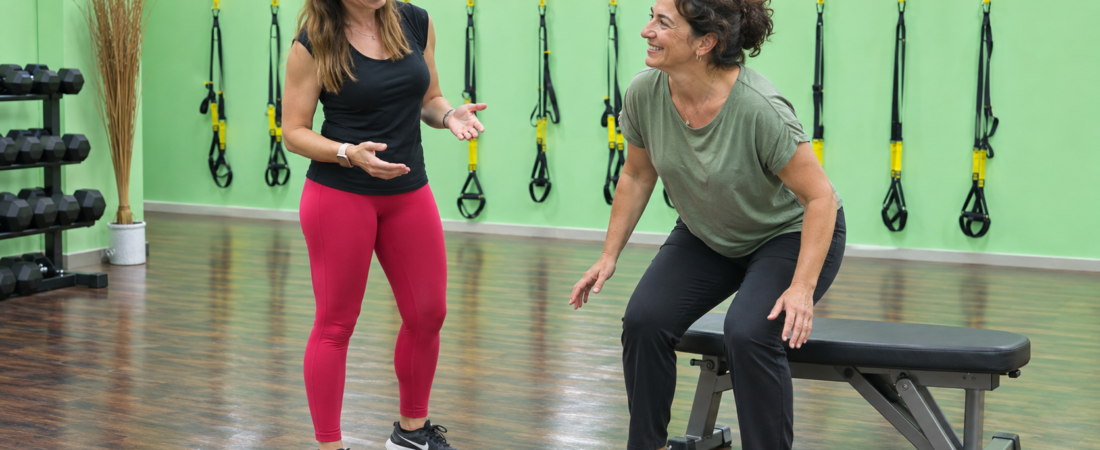
You might walk along the seafront at the weekend and still spend most of Tuesday in the same chair. By the time you close your laptop, what you’d really like is to move a bit, feel stronger on the stairs and carry the shopping upstairs without needing to put it down halfway. Those are good reasons to try strength training. You can make any one of them the goal of a personal training session.
I’m Judit, a personal trainer in Naxxar. If you’re a woman over 40 and you spend much of your working day sitting, the first thing I’d ask is simple: what would you like to find easier? Your answer tells us more about where to begin than the number on a dumbbell.
What do Malta’s activity figures tell us?
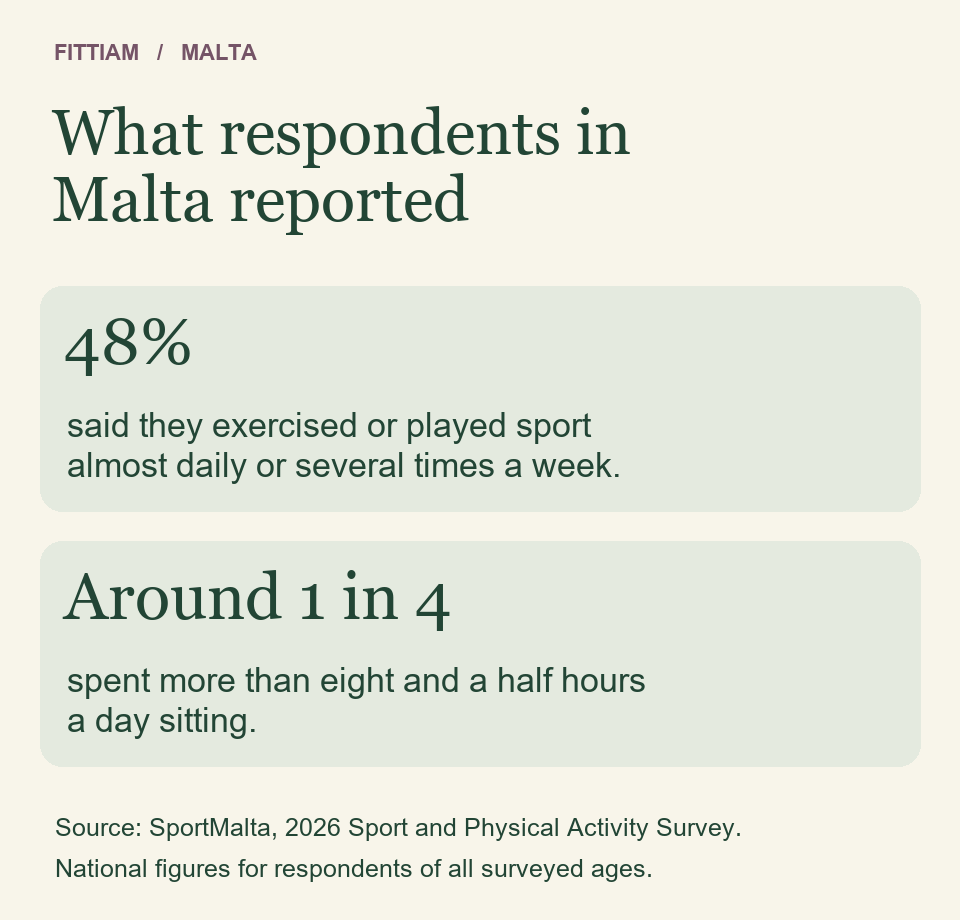
In the 2026 Sport and Physical Activity Survey, 48% of respondents in Malta said they exercised or played sport almost daily or several times a week. The same survey found that around one in four spent more than eight and a half hours a day sitting, compared with 12% across the EU. These are national figures for reported habits. The survey didn’t test fitness or measure strength specifically among women over 40. SportMalta’s summary of the 2026 findings
For someone with a desk job, those figures raise two separate questions. How often do I get out of my chair during work? And when do my muscles get to work against a little resistance? Walking to get lunch gives you time on your feet. Practising a squat or carrying a weight gives your legs and arms a different task. There’s room for both, even in a busy week.
What can strength training help you do?
Think about the difference between standing up from your office chair and getting out of a low sofa. The movement is familiar, but the lower seat asks more of your legs. In a session, we might start with a bench at a comfortable height. You sit down slowly, stand back up and notice how much help you need from your hands. Over time, we can change the height or add a little resistance. You have a clear way to see whether the movement is becoming easier.
Other everyday goals lead to different choices:
| If you’d like to… | What we might practise | What you could notice over time |
|---|---|---|
| Feel steadier climbing steps | Stepping onto a low platform, using support if helpful, and lowering yourself slowly. | You feel more in control stepping down as well as going up. |
| Carry shopping or a laptop bag more comfortably | Picking up a manageable weight and carrying it a short distance. | You can carry a familiar load a little further before you want to put it down. |
| Use your upper body more after a day at the keyboard | A rowing movement with a resistance band, drawing your elbows back and controlling the return. | You can manage several smooth repetitions at a resistance that used to feel challenging. |
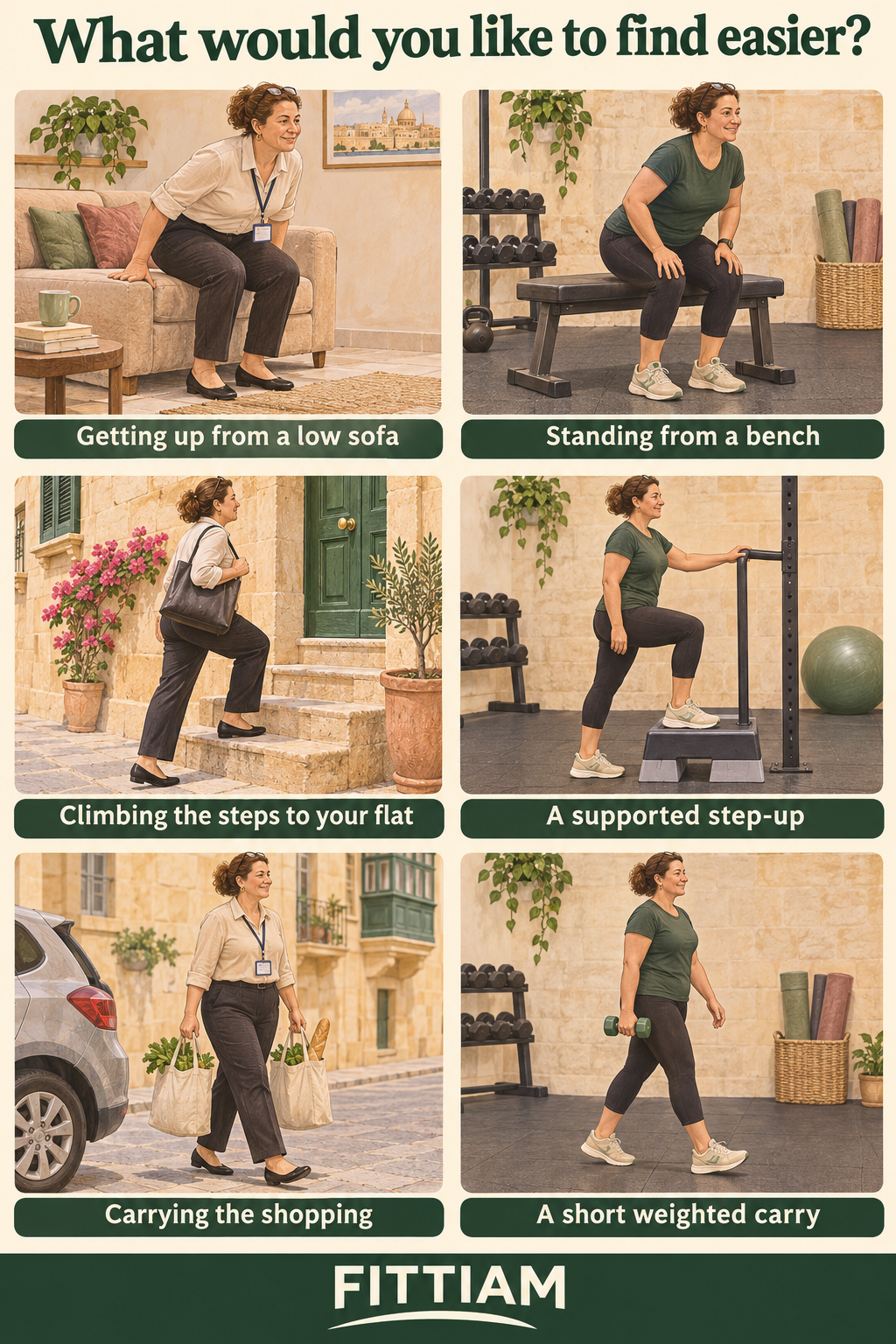
These examples give us something practical to work towards. If your main concern is persistent or worsening back or joint pain, speak to your GP or physiotherapist about what’s suitable for you.
Will lifting weights make me look muscular straight away?
No. You can get better at an exercise well before you see a change in the mirror. On your first visit, picking up a weight may feel awkward because you’re thinking about your feet, your grip and what to do next. With practice, those parts start to come together. The same weight can feel more manageable, and that’s progress you can use.
Visible muscle growth takes repeated training over time, and the extent varies. Research in women aged 40–60 also illustrates why it helps to distinguish strength from muscle size. In a controlled free-weight training study, researchers tracked how much participants could lift and measured changes in body composition separately. Getting stronger and looking noticeably more muscular are different outcomes. Read the study on resistance training in women aged 40–60
If you tell me, “I want to feel stronger, but changing my shape isn’t a goal,” we can choose measures that reflect that. Perhaps you’d like to climb the steps to your flat more comfortably or feel confident picking up a suitcase. We can track those things without taking body measurements.
What does personal training add after 40?
Two women of 45 can have very different starting points. One might swim twice a week and feel completely new to weights. Another might have years of gym experience but be returning after a long break. Age alone gives me very little information about the right exercise or resistance for either woman.
In a one-to-one session, we can try a movement, change one detail and see how it feels. Suppose you’d like stronger legs, but halfway through a set of squats your heels lift and you feel unsteady. We could try a higher bench or a shallower squat, then repeat it. You get to feel the difference for yourself and ask questions while the movement is fresh in your mind.
There’s room to account for how your week is going, too. If you’re going through perimenopause and a poor night’s sleep has left you tired, tell me. We can agree on a manageable session that day. On a day when you feel rested and the same exercise feels comfortable, we can explore a little more resistance. Explore personal training with me in Naxxar
A manageable place to start this week
Choose one workday habit and one strength goal. For the workday habit, find a moment you already recognise. When your morning meeting ends, you might walk to refill your glass before opening the next file. If your calls run back to back, choose the first gap you can reliably take. The one-day sitting check can help you spot it.
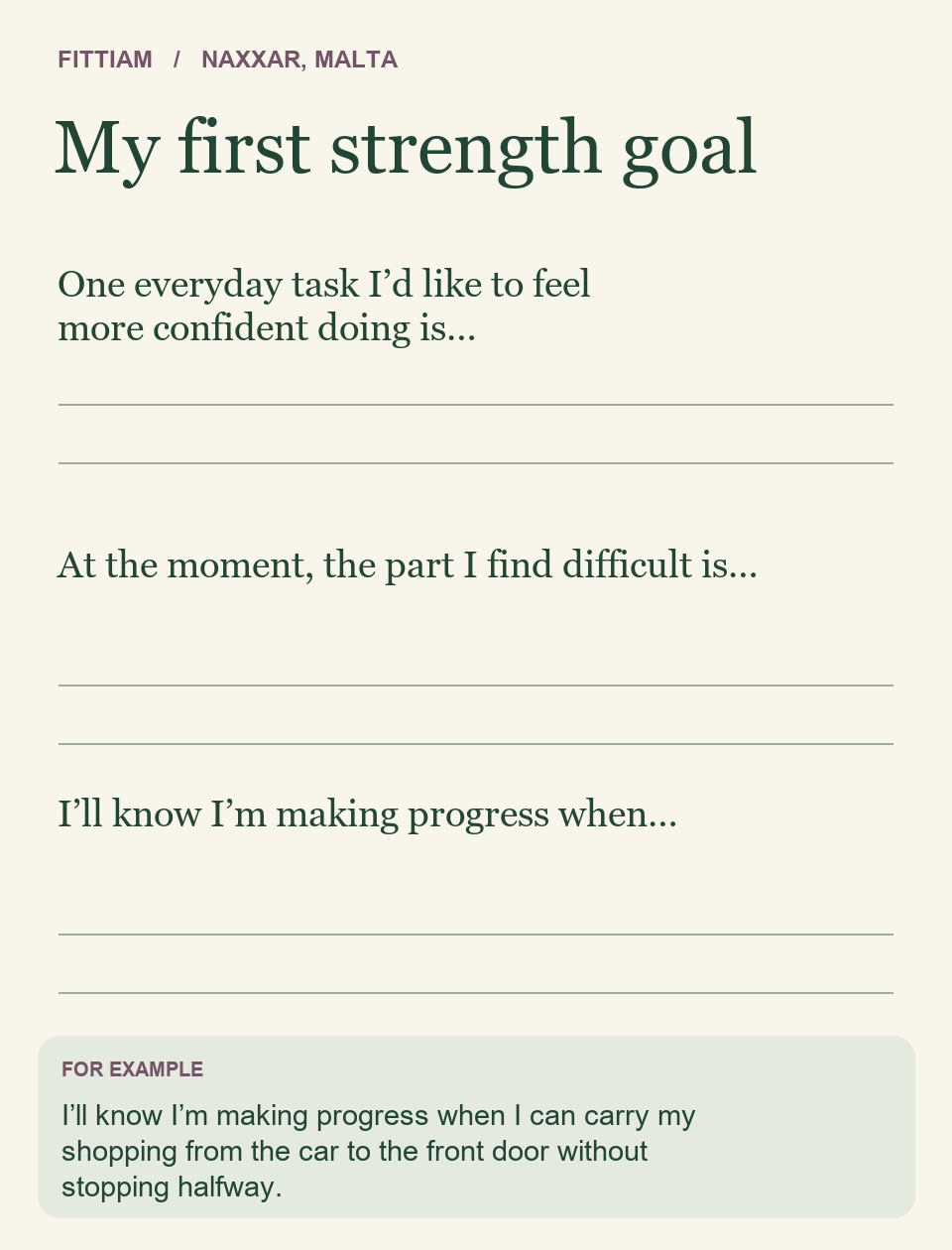
For the strength goal, finish this sentence: “In a few months, I’d love to feel more confident when I…” Be specific. “Carry my shopping from the car to my flat” gives us a useful starting point. At your first session, we can choose a movement you feel comfortable trying and agree on how you’ll recognise progress.
Frequently Asked Questions
I already walk most days. Is there a reason to add strength training?
Yes, especially if your goal involves lifting, carrying or getting up from a low seat. Walking gives you regular time on your feet. Strength training lets you practise working against resistance and gradually adjust the challenge for a particular movement. You can keep the walks you enjoy.
What if I’ve never set foot in a gym?
You can start there. Tell me what feels unfamiliar, whether it’s choosing a weight, using the equipment or simply knowing where to stand. We can spend the first session learning a few movements well enough that you recognise them next time. If you’d like an example of how to fit movement around work, try this first-week guide for busy adults in Malta.
Can I come with a friend if one of us is stronger?
Yes. In a shared personal training session for two or three people, each of you can use a different resistance, take a different number of repetitions or pause when you need to. If you’d enjoy learning the same movement side by side, you can see how that works in my guide to Gymstick training in Naxxar.